Topological Superconductors & Topological Phases of Matter
This research explores the mathematical and physical structure of topological superconductors, focusing on how topology, symmetry, and quantum field structure govern superconducting and insulating phases. The work connects condensed matter physics with tools from topology and homotopy theory, emphasizing classification principles and invariant-based descriptions of quantum phases.
From a mathematical perspective, the work highlights how tools from:
- Homotopy theory
- Topological invariants
- Fiber bundle viewpoints
- Symmetry class classification
naturally organize superconducting phase diagrams and predict robust boundary phenomena.
General Relativity via Mercury’s Perihelion Precession
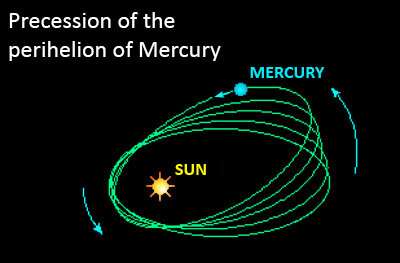
- In Newtonian gravity, a planet orbiting a point mass follows a closed ellipse. Any precession of the perihelion must come from external perturbations (other planets, oblateness, numerical error, etc.). However, observations of Mercury’s orbit show a small residual precession that cannot be explained classically.
- In GR, Mercury does not move in a force field but along geodesics of curved spacetime generated by the Sun’s mass. When reduced to an effective one-body problem, this curvature introduces a small relativistic correction to the Newtonian potential.
- In practice, this leads to an equation of motion of the form
$\ddot{r} = -\frac{GM}{r^2} + \frac{3GM}{c^2r^4}L^2$,
where the additional term is purely relativistic.
In this project, the relativistic effect is illustrated computationally by:
- Numerically integrating the modified equations of motion,
- Comparing trajectories with and without the relativistic correction,
- Extracting the accumulated perihelion shift over many orbital periods.
This demonstrates how small geometric corrections to the equations of motion, when integrated over long timescales, lead to observable macroscopic effects—one of the clearest computational manifestations of general relativity.
Double Pendulum
Machine Learning: Movie Recommendation System
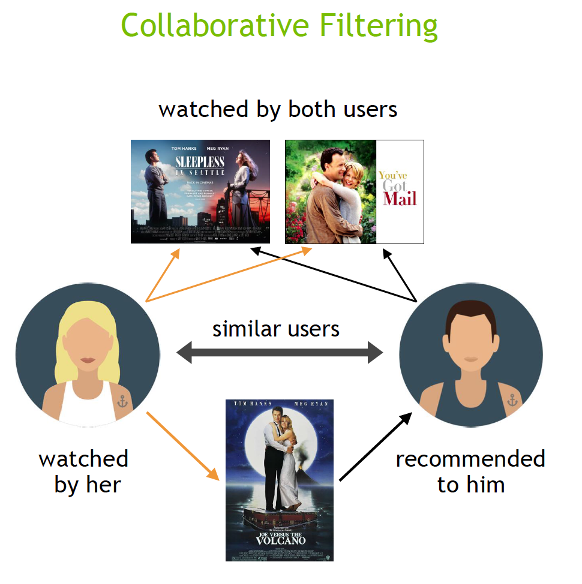
The project emphasizes:
- Data preprocessing and construction of a user–item rating matrix,
- Algorithmic reasoning behind recommendation logic,
- Practical deployment through a simple graphical user interface.
Overall, it serves as an applied introduction to machine learning for preference prediction, combining data analysis, algorithm design, and user-facing implementation.
Gauge Transformations in Electrodynamics
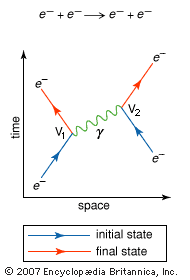
Topics & Methods
- Maxwell’s equations as an initial value problem
- Electromagnetic potentials and gauge transformations
- Gauge invariance and Utiyama’s theorem
- Temporal gauge and well-posedness
- Variational formulation of classical field theories
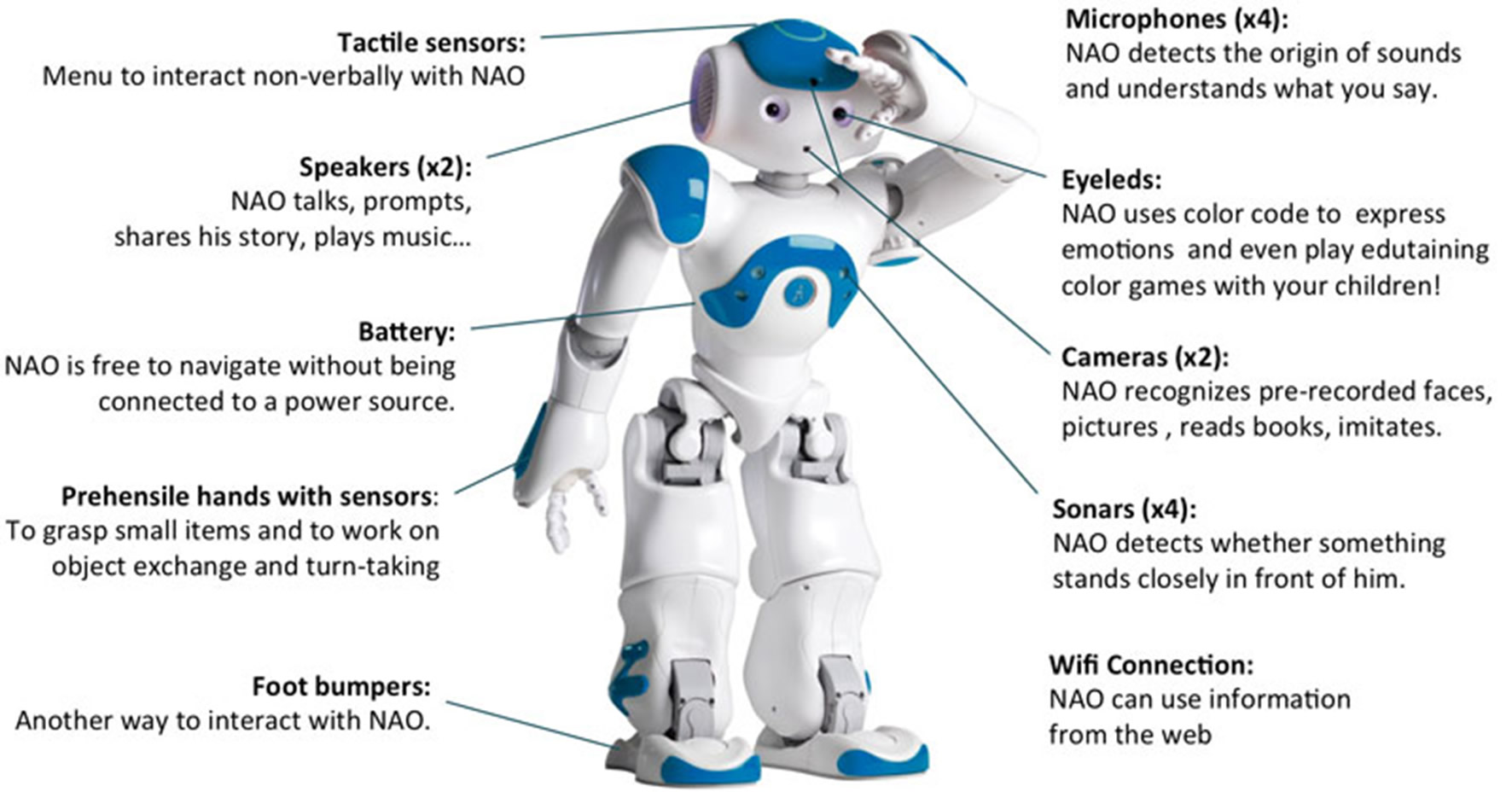
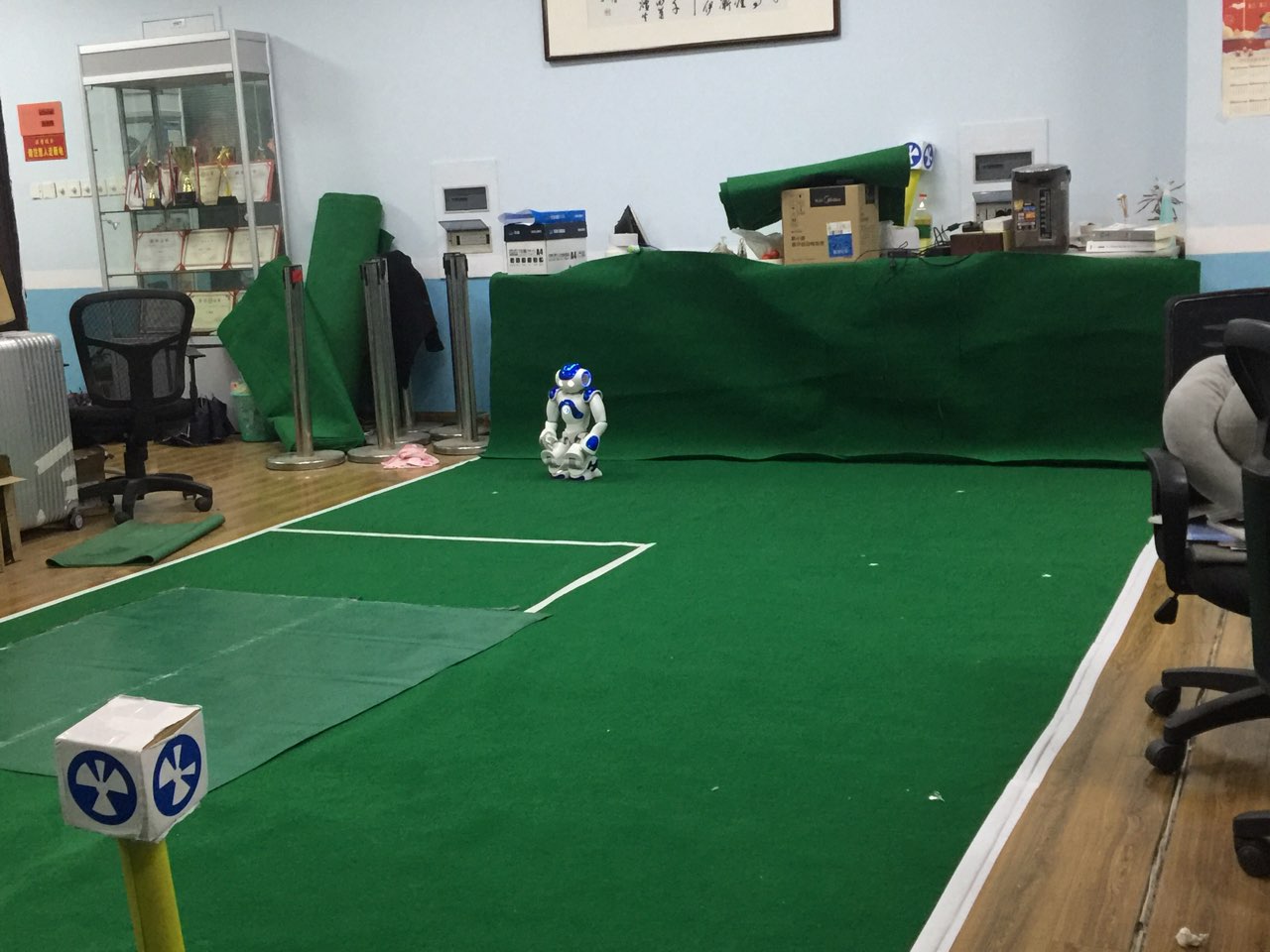
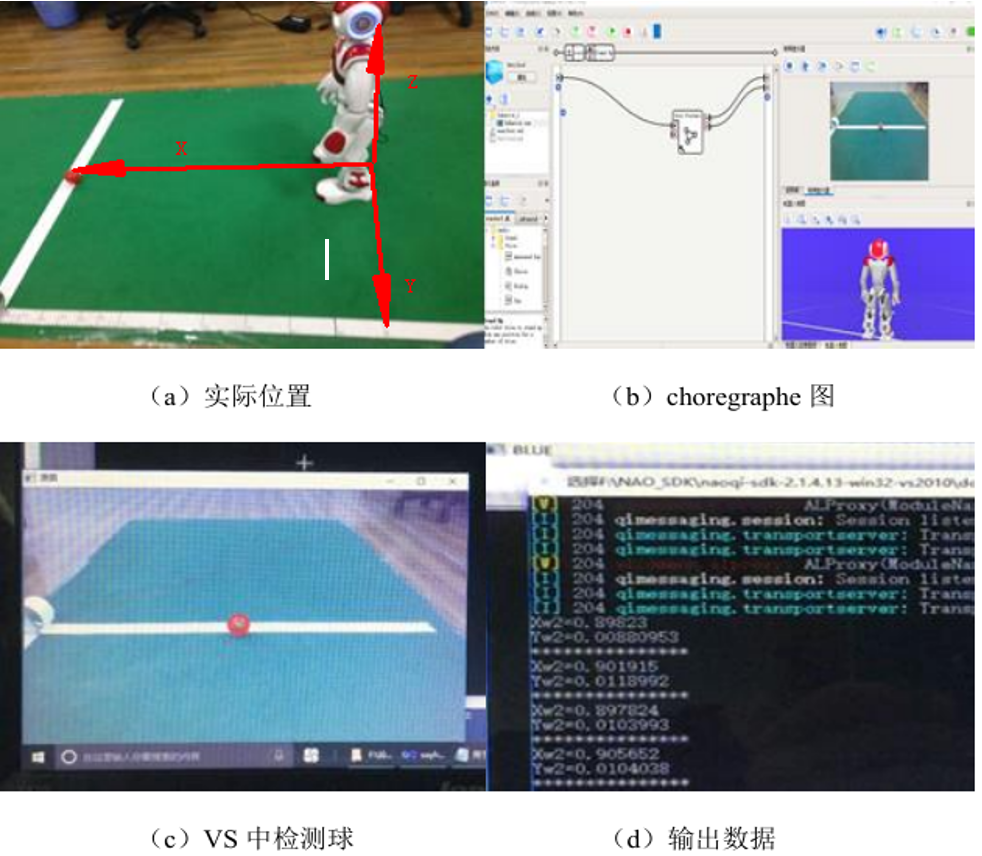
NAO Humanoid Robot
From Graphics to Motion: A Vision-Driven Robot Pipeline
Project Overview
I developed a complete end-to-end robotic calligraphy system that enables a Dobot robotic arm to write complex characters—such as Chinese calligraphy and poetry, using a soft brush on soft fabric paper—by converting vector graphics into precise physical motion.
System Architecture
The system is organized as a multi-stage pipeline:
- Vector Representation (SVG) Characters are represented as SVG files composed of stroke paths.
- Geometry Extraction & Normalization A preprocessing module parses SVG polylines, extracts stroke points, normalizes coordinates, and encodes stroke boundaries.
- Stroke-Level Motion Execution Each stroke is executed by the robot through:
- Safe positioning (pen up)
- Controlled descent (pen down)
- Continuous planar tracing
- Stroke termination (pen up)
- Page-Level Orchestration Characters are arranged into a structured grid to write full poems, with human-in-the-loop correction for paper alignment between lines.
- Hardware Interface All motions are executed through the Dobot SDK using queued Cartesian commands with synchronized execution and feedback.
Key Technical Contributions
- SVG-to-Robot Path Conversion Designed a parser that converts vector stroke geometry into normalized robot coordinates, preserving stroke order and structure.
- Hierarchical Motion Control Implemented a clean separation between:
- Stroke-level trajectories
- Character-level composition
- Poem/page-level layout
- Pen-Up / Pen-Down Modeling Encoded writing semantics directly into robot motion through Z-axis control, closely mimicking human handwriting behavior.
- Real-World Calibration Handling Integrated manual alignment feedback to compensate for paper displacement, highlighting practical challenges in physical robotics systems.
- Queued Motion Synchronization Ensured deterministic execution by explicitly managing command queues and blocking until motion completion.
Technologies & Tools
- Hardware: Dobot robotic arm
- Programming Language: Python (ctypes-based DLL bindings)
- Robot Control: Dobot SDK (PTP Cartesian motion)
- Geometry Processing: SVG parsing, coordinate normalization
- Operating Mode: Bare-metal robot control (no ROS)
Broader Impact & Relevance
This project sits at the intersection of:
- Robotics and automation
- Computational geometry
- Human–robot interaction
- Embodied computation
It demonstrates how abstract digital representations can be physically instantiated, a theme relevant to robotics research, cyber-physical systems, and intelligent manufacturing.
Back
STM32 Real Time Temperature Sensing and Display
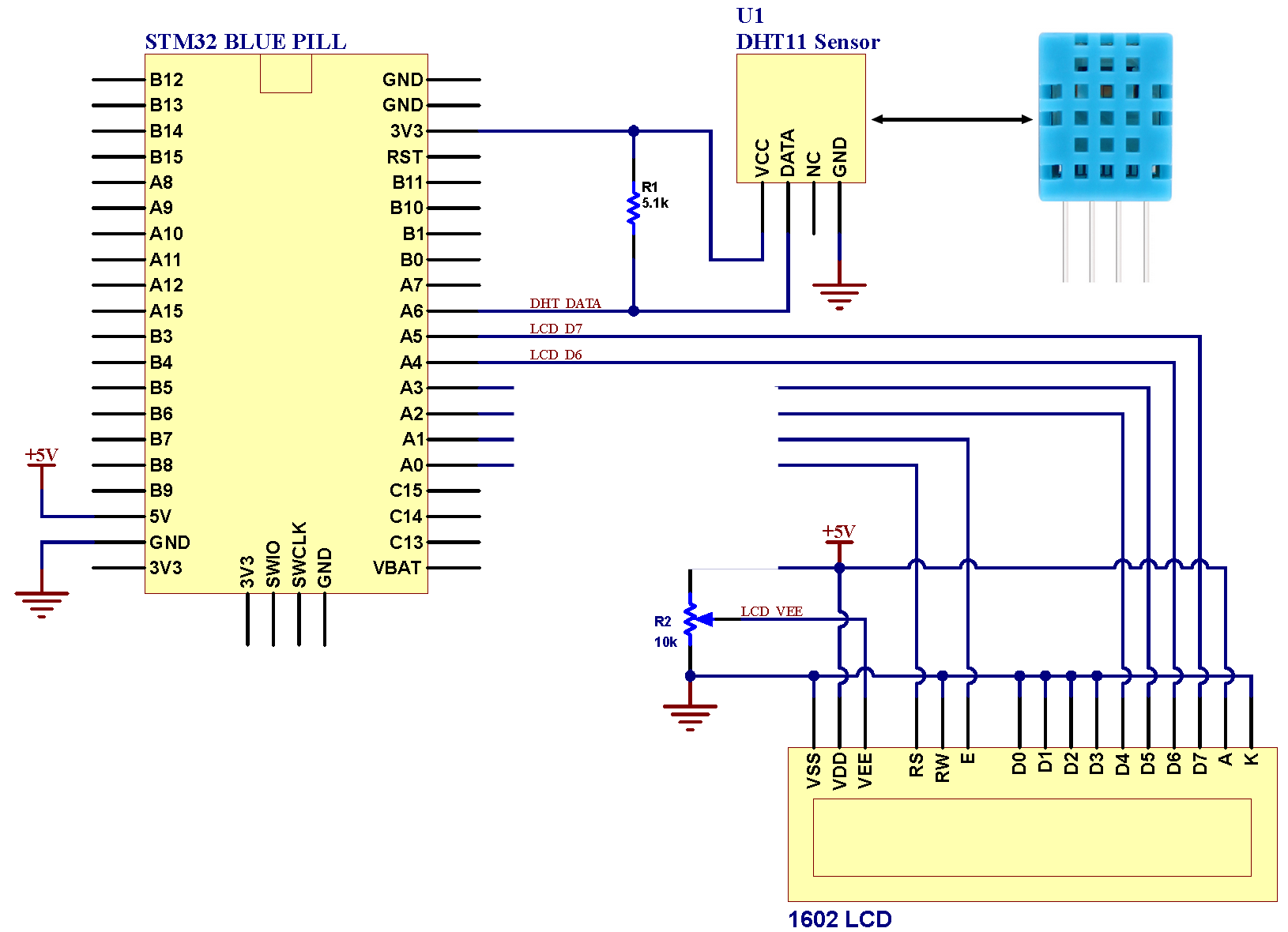
The program continuously samples the STM32 internal temperature sensor via ADC, converts the voltage to temperature using the datasheet formula, and displays the real-time temperature on an LCD screen.
Technical level assessment
This project demonstrates:
- Direct ADC usage
- Hardware calibration equations
- Floating-point computation on Cortex-M3
- LCD driver integration
- Embedded system timing control
Precise Synchronous Frequency Offset Apparatus for Multi-Robot RF Communication
Reference Signal Extraction & Calibration Method
A 1 MHz standard frequency reference embedded in broadcast TV synchronization intervals is used as the calibration source. Specific horizontal line intervals contain atomic-clock-disciplined pulses with very high precision. The system:
- Demodulates composite video input
- Separates sync signals
- Selects target line intervals via gated counters
- Extracts standard frequency pulses
- Compares against divided VCXO output
- Computes phase/time error in MCU
- Applies DAC feedback to discipline VCXO
This produces a continuously calibrated oscillator reference with long-term stability inherited from the broadcast atomic clock standard.
Digital Control Loop Architecture
Instead of a purely analog PLL loop, the calibration loop is implemented as:
- Phase detection → ADC sampling
- MCU digital error estimation
- Software filtering and control law
- DAC feedback to VCXO
- Continuous adaptive correction
Frequency Generation & Channelization
After VCXO calibration:
- Reference is converted to a 9 kHz disciplined excitation signal
- Passed into a frequency synthesizer unit (PLL bank)
- Configurable division ratios produce target carrier frequencies
- Dial/preset switches map directly to frequency division coefficients
- Multiple PLL paths run in main/standby redundancy pairs
Hardware Subsystems
- Intelligent Processing Unit (IPU)
- Frequency Synthesizer Unit (FSU)
- Frequency Multiplier Board
- UPS Subsystem
Reliability & Fault Diagnostics
The system includes structured diagnostic indicators:
- Work/Alarm states
- Reference presence & stability flags
- PLL lock indicators
- Calibration status lights
- Power rail monitoring LEDs
Troubleshooting is organized by subsystem isolation:
- Power board validation
- IPU calibration path checks
- PLL lock verification
- Reference input continuity
Research & Engineering Significance
This project demonstrates a hybrid embedded-control + RF frequency synthesis architecture where:
- Broadcast metrology signals are repurposed as precision references
- Digital control replaces analog PLL loops
- Redundant synthesizer paths improve robustness
- Deterministic RF channel spacing supports swarm robotics
It connects embedded systems, signal processing, frequency metrology, and RF communications into a unified synchronization platform.
SwitchVision OCR: Deep Text Detection for Industrial Panels
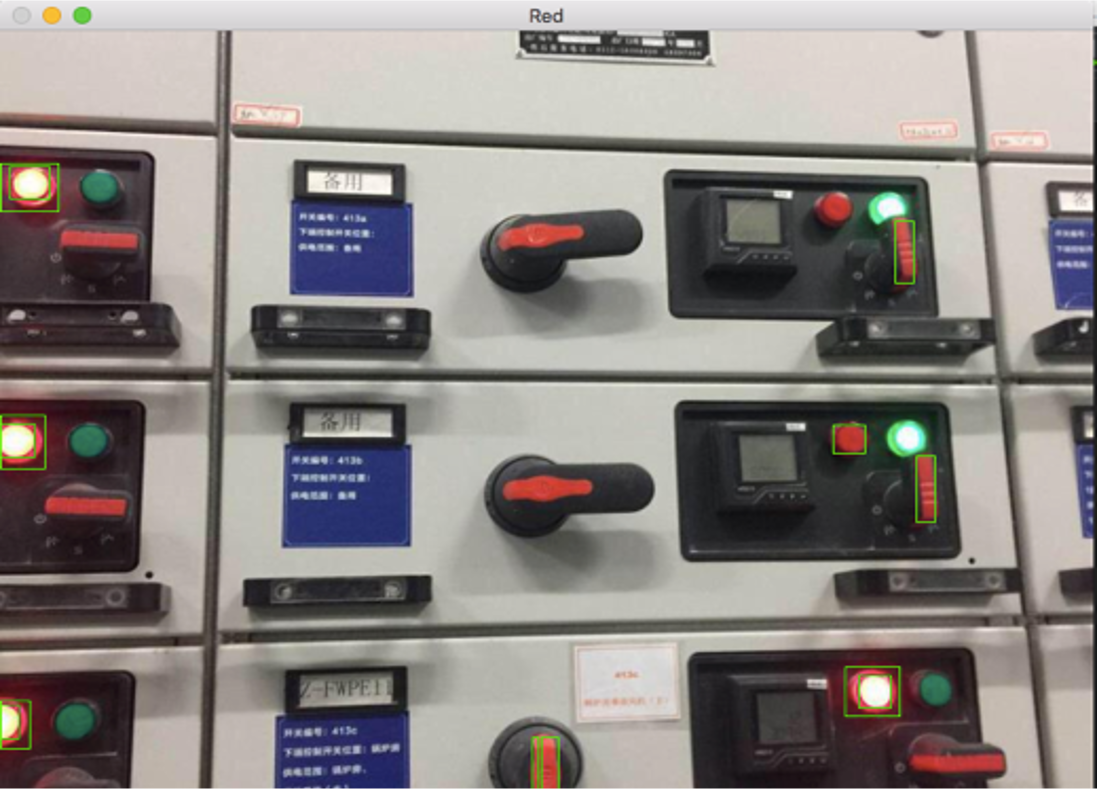
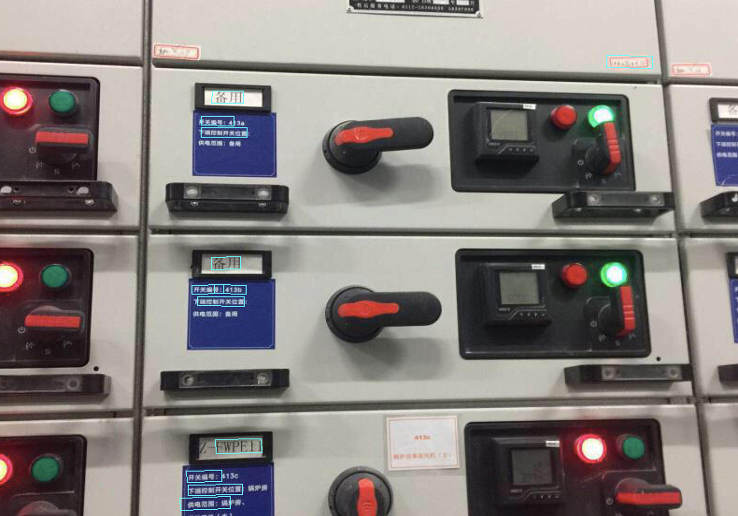
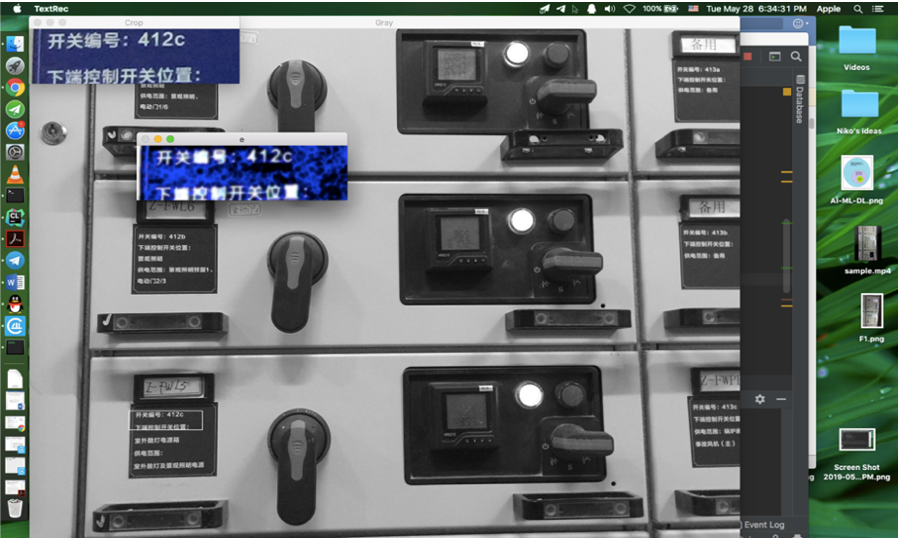
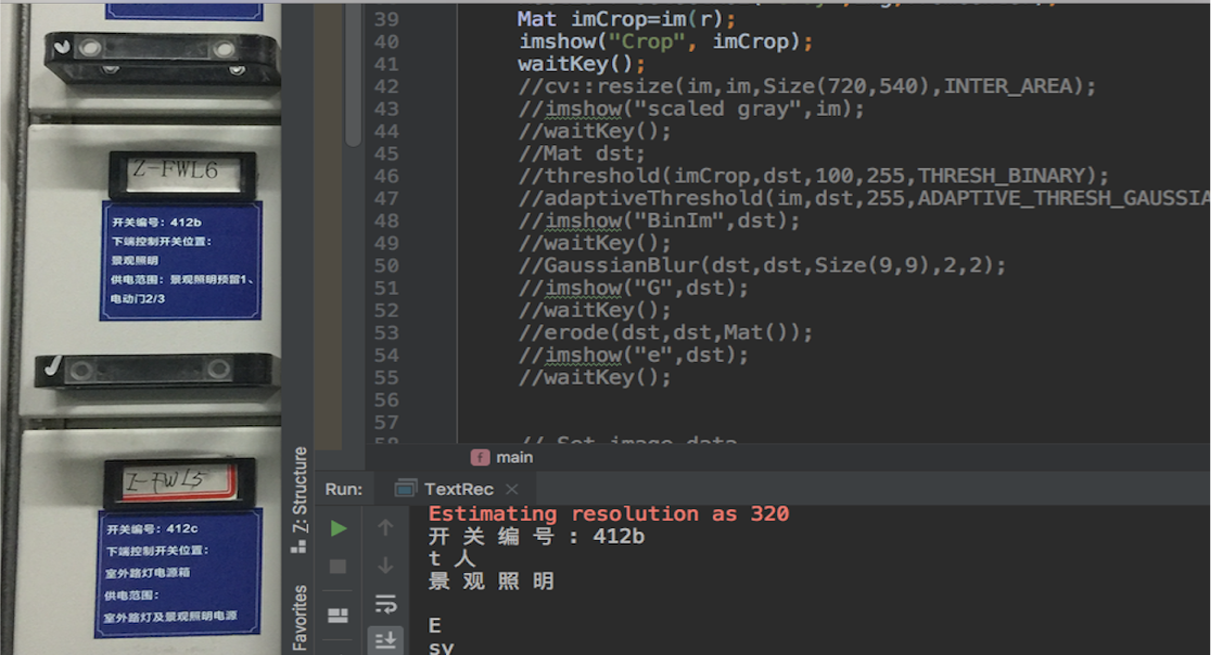
Highlights
- Deep-learning–based text region detection
- ROI extraction and refinement pipeline
- OCR recognition and post-processing
- Image and video frame support
- Visual debugging and annotated outputs
- C++ / OpenCV / EAST / Tesseract stack